
Coach, boat, tuk-tuk and ferry all in a day. It was windy, and I’m not wonderful on boats, so I took a motion sickness pill. On the coach, our excursion guide assured us that in rough seas, we would sail to Malta’s little sibling, Gozo, via the steadier car and passenger ferry.
At the harbour, a smaller motorised boat arrived; we embarked and bounced across the waves, sending spray over people sitting on outer seats and causing some others to turn an unhealthy shade of grey. I was so pleased to have taken medication earlier.
Thankfully, it is a fairly short journey, and we were soon on the quayside. Mr Word Loft and I met our driver and boarded our allotted tuk-tuk with a family of four sitting behind us.
We drove past lush fields, through to Victoria, which Gozitans call Rabat and the island’s capital. We arrived at our first stop, Gozo Cathedral, which was erected after an earthquake in 1693. Law courts and the Governor’s Palace border the square, and the museum is renowned for its artefacts, especially relics discovered at Neolithic sites.
Rough flowerbeds hug the perimeter, where wildflowers grow by the stony edge, such as rare Maltese toadflax, along with golden chamomile. The white and yellow blooms blend harmoniously with pastoral scenes below.
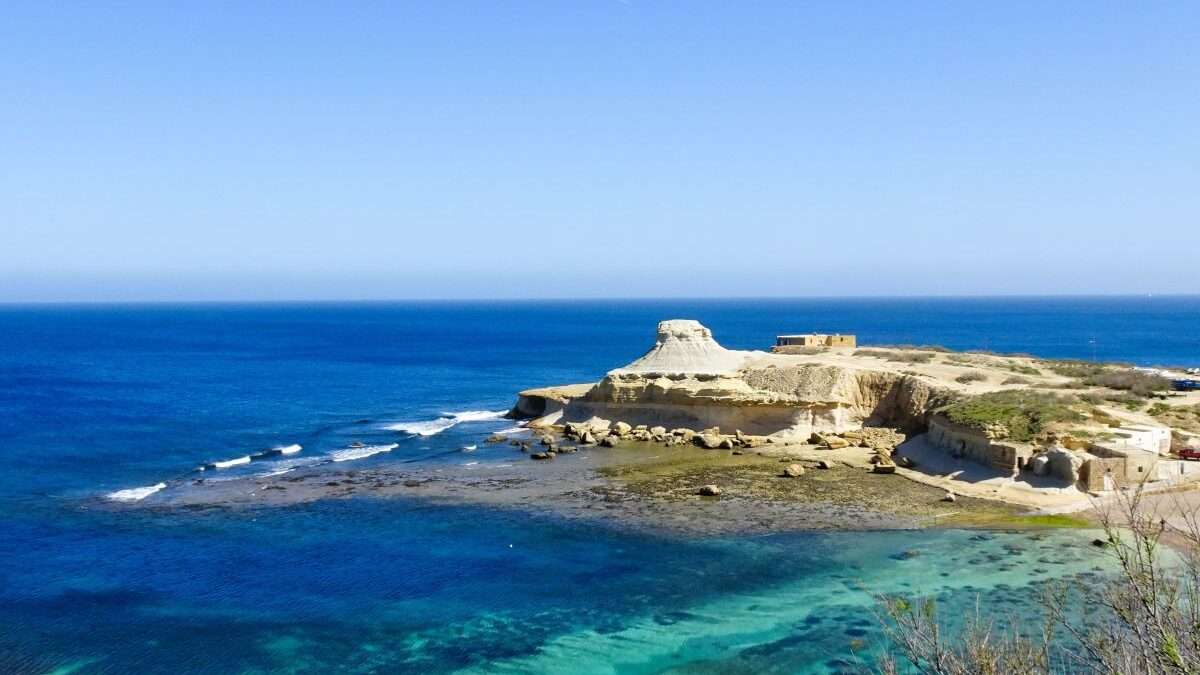
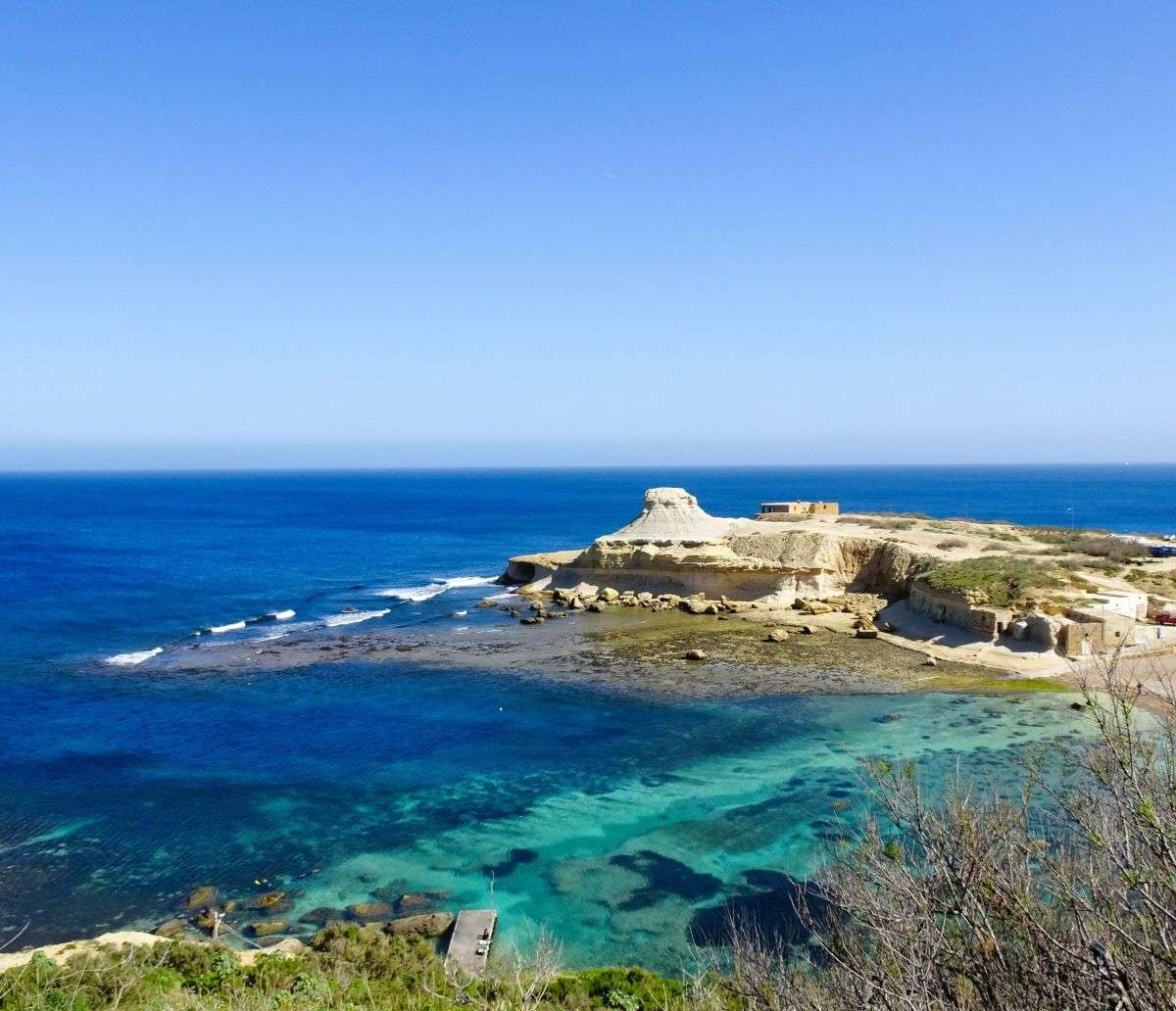
Rural settings changed to a calming turquoise ocean as we sped down cliffside roads to the next locale – Xwejni Bay’s salt mines. With the sun shining, tuk-tuks make the perfect mode of transport with their shady canopies and sides open to the breeze. Good for unhindered vision too. The beachscape stretches like a gigantic, irregular paintbox. Each pale-amber pan filled with a subtle range of aquamarine, cerulean and natural hues. I wondered why glittering white wasn’t dominant, guessing the salt must have been harvested recently, but I soon learned that it is only produced in summer due to heat and the evaporation process.
Although the shore looks sandy, the terrain is hard and sculpted by the elements into smooth dips and clear pools, unlike the craggy, leaden rockpools teaming with sea life I’m accustomed to in Cornwall.
Back on the main road and a few miles away, we approached the national shrine of Ta’ Pinu. I had noticed the basilica’s domed rooftop, belfries, and tower in the distance that morning, so I was pleased to spend time there. It was a chapel, originating before 1545, when it was rebuilt, and in 1883, it became a place of pilgrimage. By 1919, it was extended to the beautiful building admired today, gaining further prestige in 1990 when Pope John Paul II visited it.
In front is a circular red-tiled floor with curved marble benches and a mosaic wall. Thousands of lustred and gold tesserae glint, bringing vivacity to the biblical figures depicted in the art.
At Fontana, a village near the dock, we stopped off at a local produce market, where samples of local prickly pear liqueur were offered. The syrupy, strawberry/melon-like flavour was irresistible, so we purchased a bottle, noting the bottle label’s illustration. We had seen the cactus with maroon knobbly fruits, growing in gardens and along roadsides, but hadn’t appreciated its hidden qualities.
The weather was gustier than on our outward journey, so we were relieved to go back to Malta in a larger seafaring vessel.
However, there was a hint of disappointment. The tour was unable to go to the Blue Lagoon, Comino, as outlined in the itinerary. Conditions made it too difficult to land there, but I was more than happy to catch a glimpse of the tiny island with its idyllic cove as I sipped tea and we safely chugged by.
Best wishes,
Sue. X